
Feb 26, 2026
Michael Vandi
A borrower submits an inquiry and waits. If mortgage teams don’t respond quickly, they move on to the next lender. That’s the reality mortgage brokers face every day.
Customer relationship management (CRM) systems help mortgage brokers keep conversations organized, track referrals, and stay consistent with follow-ups.
CRM mortgage software extends that capability into loan pipelines, task management, and borrower communication. The right platform can improve response times and increase conversions.
In this guide, we’ll cover seven CRM mortgage software options you can try today.
Book a demo to see how Addy AI enhances your CRM mortgage software for smoother loan processing!
TL;DR
Here are the top seven CRM mortgage software tools in 2026:
Salesforce
Pipedrive
Monday CRM
BNTouch
Aidium
Keap
Total Expert
What CRM Mortgage Software Handles in a Loan Workflow
Mortgage CRM software manages communication, lead tracking, and pipeline visibility throughout the loan process.
It organizes borrower data and keeps mortgage professionals accountable at each stage of the loan lifecycle.
A mortgage CRM platform typically handles:
Lead management: Captures inquiries from websites and referral partners, assigns them to mortgage loan officers, and tracks response times.
Loan pipeline management: Displays each file by stage, from prospect to application to closing.
Client management: Stores client data, logs calls and emails, and records customer interactions for future reference.
Marketing automation: Sends follow-up emails and texts to nurture borrower relationships and drive repeat business.
Document tracking: Monitors uploaded files and records document requests during the mortgage process.
Loan origination system (LOS) integration: Syncs borrower data with LOS so mortgage teams don’t enter the same information twice.
Compliance records: Maintains communication history to meet industry regulations.
CRM solutions organize the relationship side of lending. They don’t calculate income, review tax returns, or evaluate loan eligibility.
7 Best Mortgage CRM Software Solutions to Try in 2026
Mortgage lenders choose CRM mortgage software based on loan volume, reporting demands, compliance oversight, and team size.
Below are the best CRM mortgage software platforms lenders rely on.
1. Salesforce
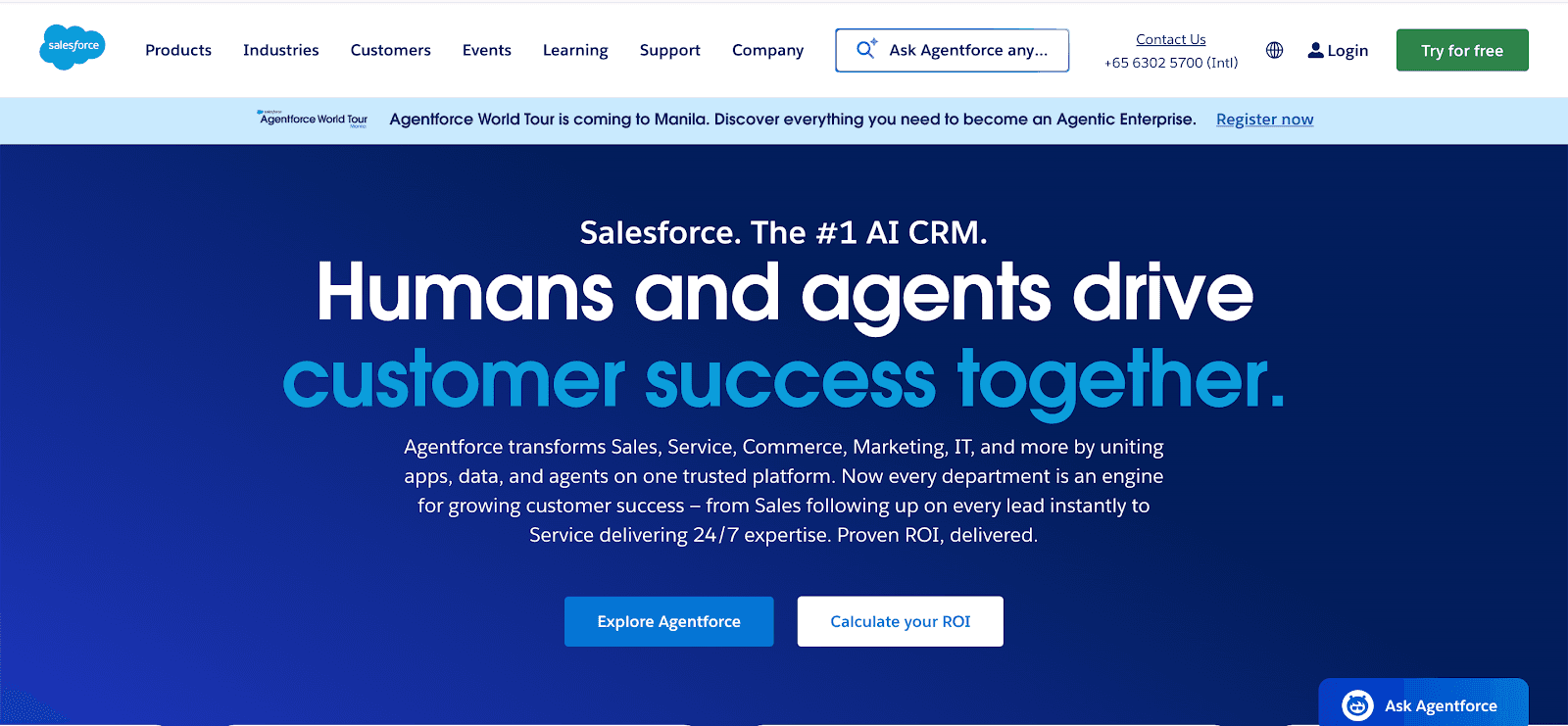
Image source: salesforce.com
Salesforce serves banks, credit unions, and mortgage companies that manage complex lending operations.
Organizations in the mortgage industry use it to manage leads, track borrower communication, and oversee the entire loan lifecycle within one CRM platform.
Key capabilities include:
Financial services cloud: Unifies contacts, accounts, and applications into a single borrower profile for consumer and commercial lending.
Digital lending: Connects point-of-sale (POS) systems with loan origination software to prefill borrower data and track applications from submission to approval.
Agentforce and AI-powered automation tools: Automate routine tasks, prioritize leads, and respond to borrower inquiries at any hour.
Marketing cloud: Runs mortgage marketing campaigns through email, mobile, and web channels using centralized customer data.
Workflow automation: Routes sales tasks between loan officers, processors, and servicing teams during the lending process.
Process compliance navigator: Monitors regulatory requirements and logs automated compliance checks.
Intelligence for financial services: Uses predictive analytics for portfolio oversight and risk evaluation.
Salesforce integrates with LOS and document management platforms, connecting sales automation with operational mortgage workflows.
2. Pipedrive
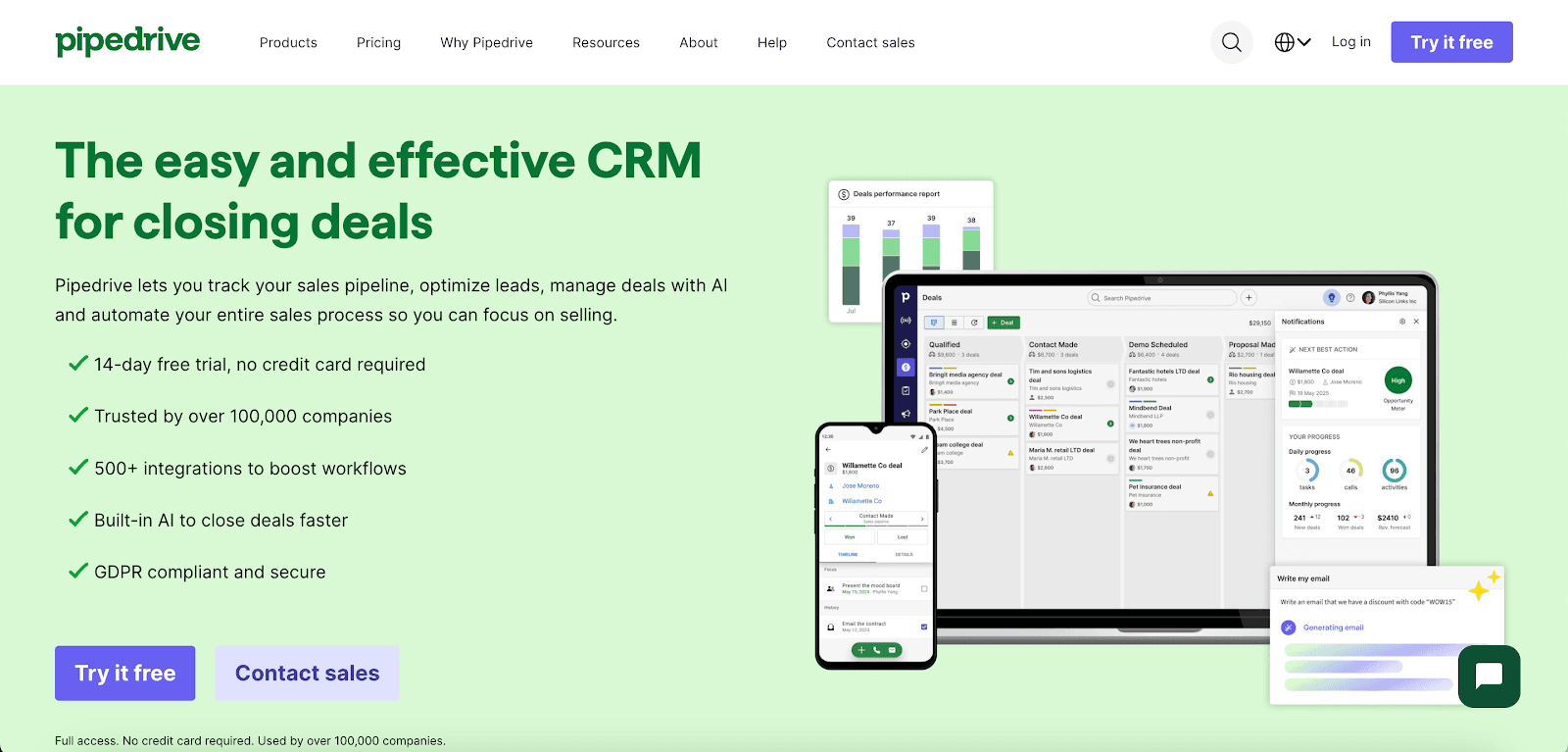
Image source: pipedrive.com
Pipedrive centers on deal tracking and contact organization. Mortgage businesses use it to manage prospects, log borrower conversations, and track each opportunity from first inquiry to closing.
Key capabilities include:
Custom deal pipelines: Loan officers map each sales stage and track deal value, probability, and expected close date.
Lead capture and routing: Imports contacts from web forms, spreadsheets, and phone calls, then assigns them to team members.
Workflow automation: Schedules follow-up reminders, updates deal stages, scores leads, and forecasts revenue.
Contact timeline: Displays emails, calls, and notes in one record so teams can review borrower history before outreach.
Reporting dashboards: Present conversion rates, sales activity, and pipeline forecasts to guide data-driven decisions.
Mobile access: Syncs calls, emails, and calendars for loan officers working with real estate agents outside the office.
Security features: Uses two-factor authentication and access monitoring to protect client data.
Pipedrive focuses on sales automation, lead management, and pipeline visibility. It tracks borrower relationships but doesn’t evaluate loan documents or underwriting criteria.
3. Monday CRM
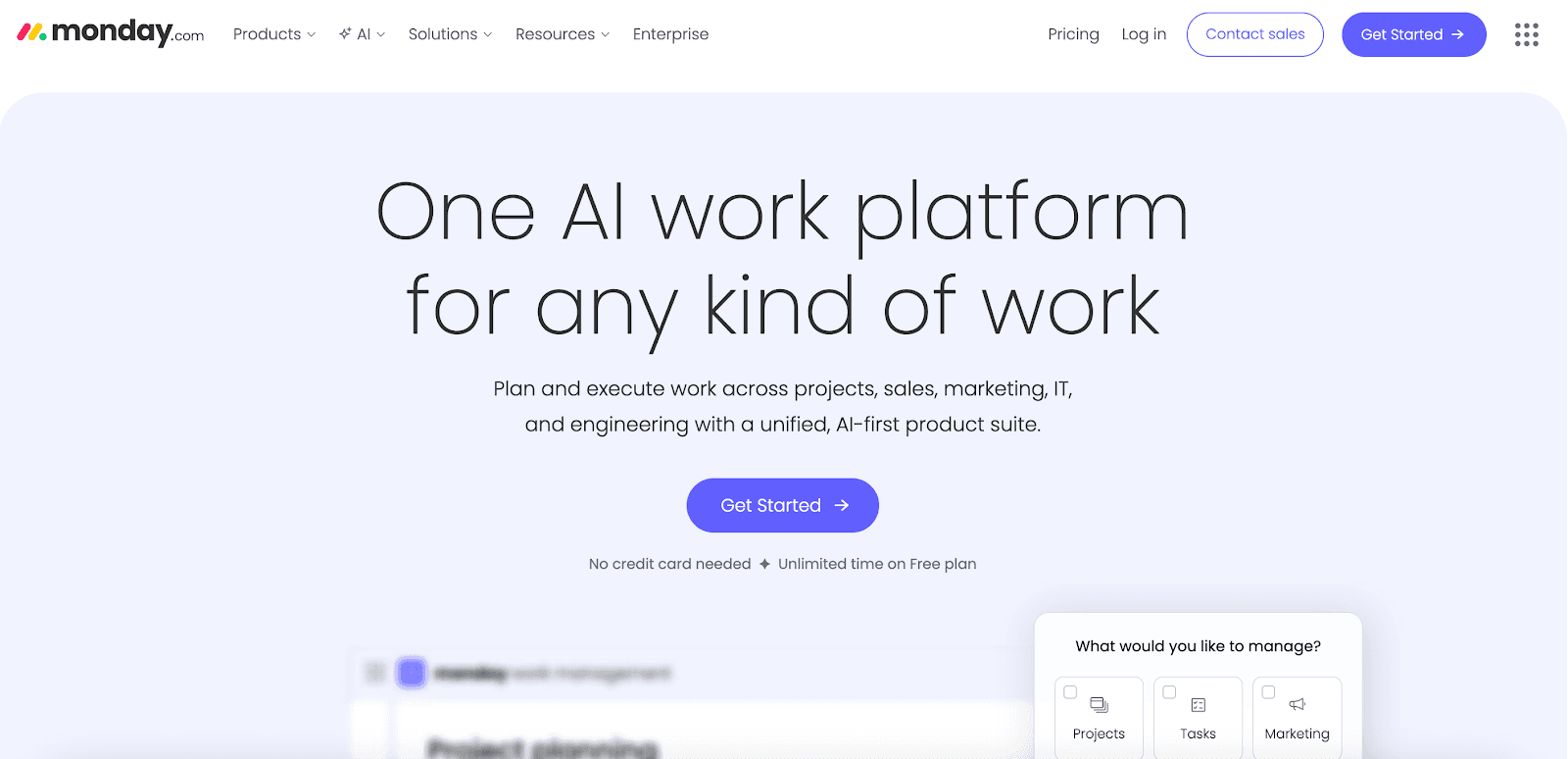
Image source: monday.com
Monday CRM gives mortgage brokers a visual system to manage client relationships, tasks, and deal stages in one workspace. Teams use boards to track every opportunity and monitor progress without switching between tools.
Key capabilities include:
AI lead management: Scores incoming mortgage inquiries and routes them to the appropriate loan officer based on workload, role, or specialty.
Deals board view: Displays each loan by stage, from new lead to application to funded, for real-time status tracking within the mortgage pipeline.
AI notetaker: Records borrower calls, summarizes key qualification details, drafts follow-up emails, and logs conversation notes in the CRM.
Automated activity logging: Captures data from emails and calls, updates borrower records, and assigns follow-up tasks to cut manual data entry.
Dashboards and reporting: Present loan pipeline forecasts, production metrics, and marketing efforts in one view.
Mobile access: Updates loan files, logs borrower calls, and adds tasks from any device while meeting with clients or referral partners.
Monday CRM centers on sales coordination and workflow automation, helping mortgage businesses keep borrower communication and pipeline activity organized.
4. BNTouch
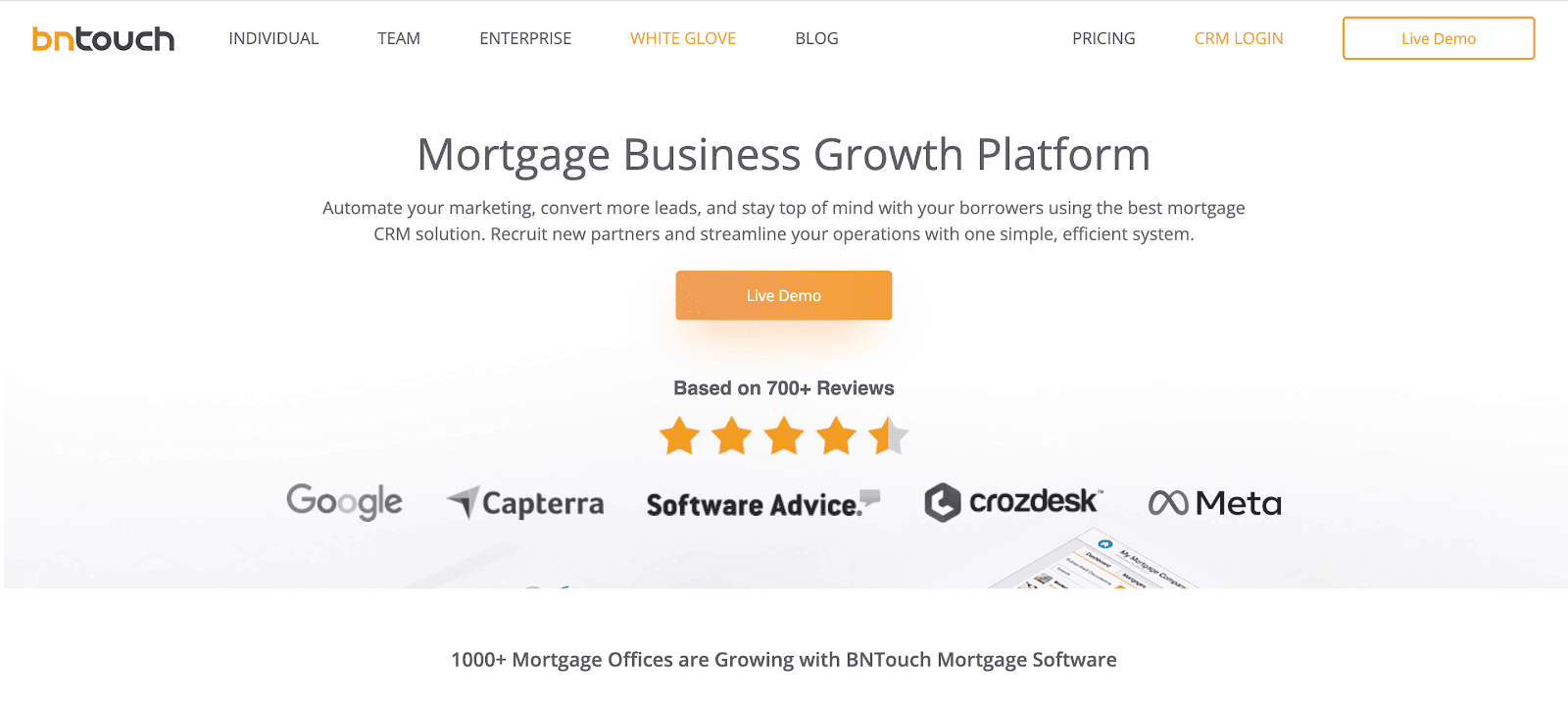
Image source: bntouch.com
BNTouch focuses on mortgage marketing and long-term borrower communication. Mortgage brokers use this mortgage broker CRM to nurture prospects, retain past clients, and keep referral partners engaged.
Key capabilities include:
Pre-built marketing campaigns: Offers 170 ready-to-launch email, messages, and print campaigns that run for years after a loan funds or is canceled.
Online 1003 and borrower portals: Collects applications, manages digital documents, and sends status updates through text messages and in-app notifications.
Automated lead routing: Distributes new inquiries to loan officers and tracks production through reporting tools.
Refinance alerts: Sends notifications when rate or equity opportunities appear in your database.
Team configuration: Applies company messaging and compliance rules to individual accounts and branches.
Lead provider integrations: Imports prospects from multiple channels into one database.
BNTouch automates repetitive tasks, keeps borrower communication consistent, and consolidates marketing efforts into one CRM platform.
5. Aidium
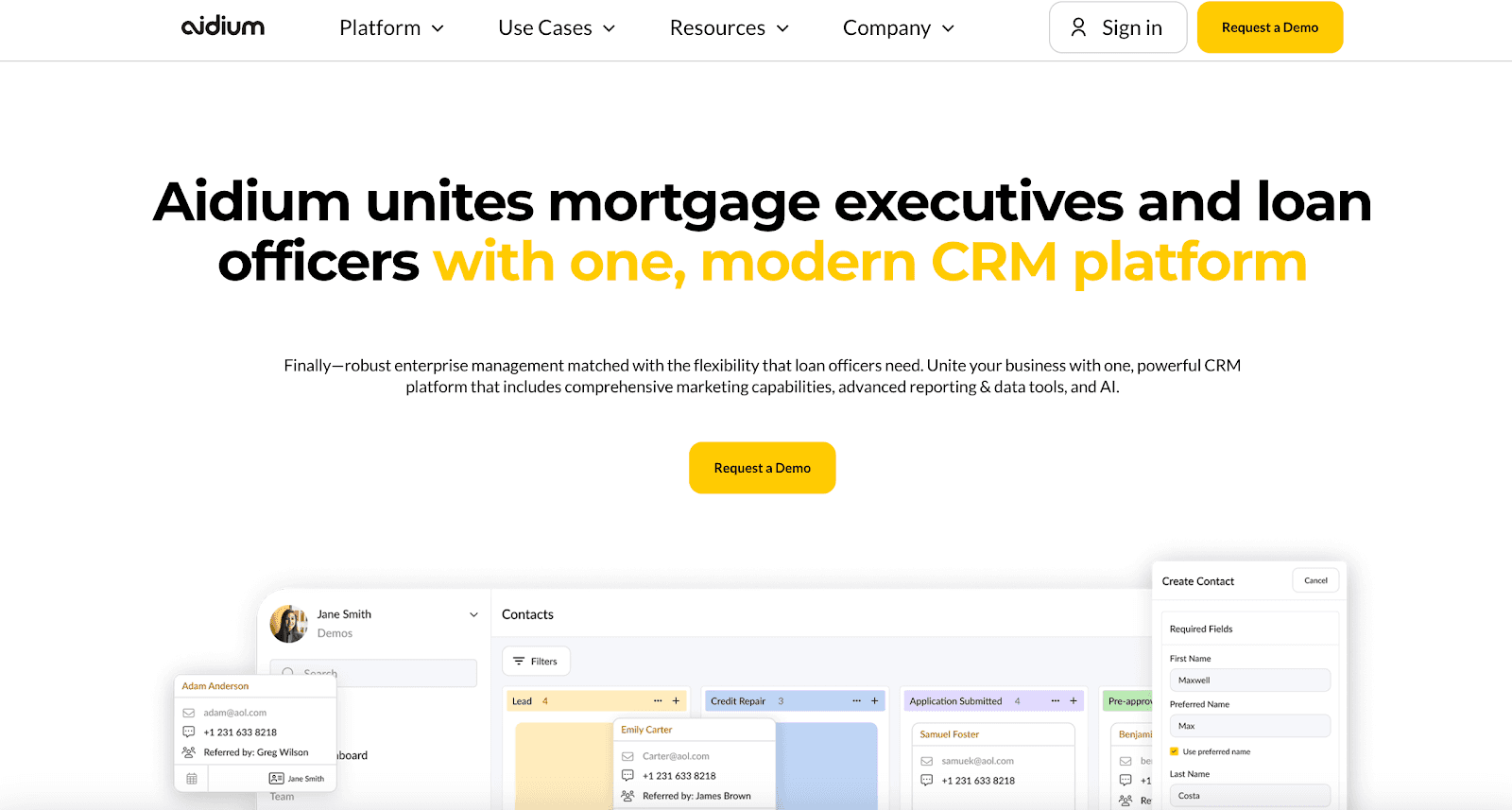
Image source: thinkaidium.com
Aidium serves mortgage companies and financial institutions that require oversight while giving producers autonomy over their pipelines.
It combines no-code automation with permission-based governance in one mortgage CRM platform.
Key capabilities include:
No-code automation engine: Offers 80+ pre-built playbooks and a custom builder to send SMS, email, assign tasks, update statuses, apply tags, and stop sequences when borrowers reply.
Custom pipeline views: Loan officers configure deal stages while leadership monitors contacts and transactions organization-wide.
Custom fields and tagging: Adds contact and transaction fields, then segments audiences for targeted campaigns.
Task management: Assigns tasks with due dates, tracks completion, and displays assignments from multiple teams in one dashboard.
Marketing asset builder: Produces co-marketing forms, flyers, and single-property sites inside the CRM.
User permissions: Governs access to automations, campaigns, and data.
Aidium centralizes data, enforces accountability, and standardizes communication in complex lending environments.
6. Keap
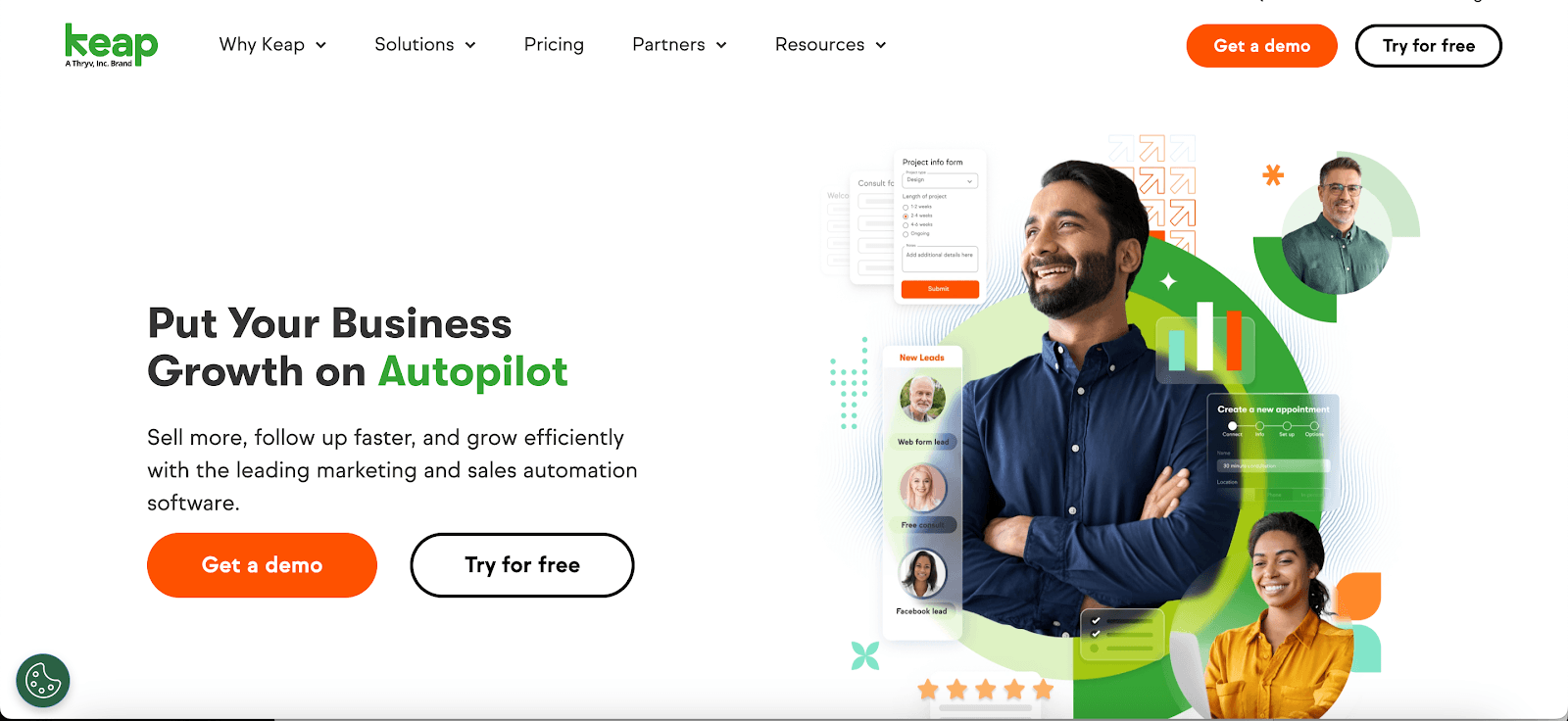
Image source: keap.com
Keap is often used by mortgage professionals who need contact management and marketing automation in one system. It integrates CRM with email, text messaging, and appointment scheduling tools.
Key capabilities include:
Lead capture tools: Collect contacts through web forms, landing pages, social media, and mobile business card scanning.
Tagging and lead scoring: Segments contacts based on activity and triggers automated follow-up sequences.
Pipeline tracking: Monitors prospects from consultation to funded loan in a visual sales pipeline.
Email and SMS automation: Sends personalized messages based on borrower behavior and campaign rules.
Appointment scheduling: Shares calendar links, confirms bookings, and sends reminder notifications.
Dedicated business line: Routes calls through a work number linked to the CRM contact record.
Broadcast messaging and referrals: Manages referral programs and sends bulk text or email updates.
Keap focuses on lead qualification, consistent follow-up, and organized client communication for mortgage and financial service professionals.
7. Total Expert
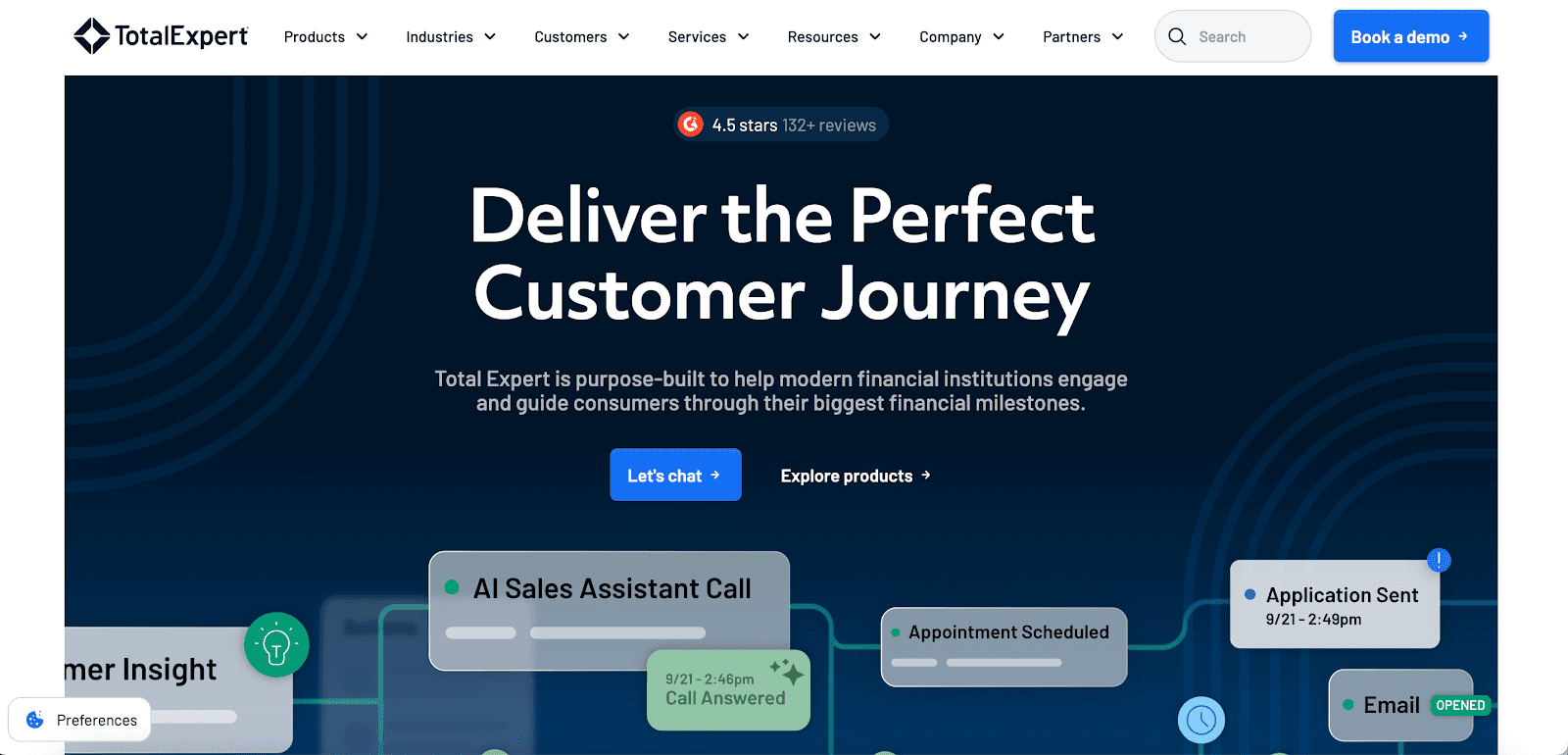
Image source: totalexpert.com
Total Expert delivers data-driven borrower engagement for lenders who want consistent deal flow and long-term relationships. It connects marketing, sales, and servicing teams through a unified mortgage CRM system.
Key capabilities include:
Rate monitoring and intent signals: Identifies borrowers who show refinance or purchase activity, then triggers targeted outreach.
Pre-approval nurture campaigns: Send reminders and educational content during the application process to keep borrowers engaged through closing.
Automated lead routing: Assigns new opportunities to loan officers based on routing rules.
Outbound and co-marketing campaigns: Builds pipeline through targeted messaging and partner programs.
Application capture tools: Engage borrowers through digital channels and guide them into the loan process.
Post-close automation: Sends payment reminders, homeownership resources, and refinance messaging after funding.
Profile enrichment and alerts: Monitors borrower data for life events and equity changes.
Total Expert emphasizes data-informed engagement, consistent communication, and sustained borrower relationships throughout the mortgage lifecycle.
Why Relationship Management Doesn’t Equal Faster Loan Approvals
The right mortgage CRM keeps your pipeline organized and your communication consistent.
However, even the best CRM software stops at relationship management. It doesn’t move a file from application to approval any faster.
CRM mortgage software tracks stages, logs calls, and stores borrower data. It doesn’t extract figures from 1040s, W-2s, or bank statements.
It doesn’t calculate debt-to-income (DTI) or loan-to-value (LTV) ratios. It doesn’t compare loan files against Fannie Mae or Freddie Mac guidelines. Loan officers and processors still review documents line by line.
Loan Processing Still Slows Closings
Delays come from file preparation, not lead management. Mortgage teams spend hours on:
Document review and validation
Automated Underwriting System (AUS) condition clearing
Income calculation from complex tax returns
Repeated follow-ups for missing borrower documents
Reducing manual data entry inside a CRM helps. It doesn’t solve underwriting delays.
According to WebMobTech, the 60-second rule now sets the standard. Borrowers expect immediate responses. The lender who connects first often wins the deal.
This is where AI-driven loan automation changes everything.
Drive Faster Loan Approvals Using Addy AI and Your CRM
CRM mortgage software captures leads and tracks borrower conversations. Addy AI takes over once the file reaches the processing and underwriting stages.
Together, they connect front-end engagement with back-end loan preparation.
Submit CTC-Ready Loans Faster With AI Underwriting
Addy AI reviews income, assets, debt-to-income, and loan-to-value within minutes. It checks each file against more than 20,000 mortgage guidelines, including Fannie Mae, Freddie Mac, and non-QM programs.
When a loan falls short, Addy AI identifies missing items and recommends adjustments. Teams can submit CTC-ready loans in as little as five minutes and close more loans with the same staff.
Automate Document Review and Conditions
Addy AI extracts data from 1003s, 1040s, W-2s, 1099s, pay stubs, and bank statements. It cross-verifies figures between documents and validates borrower information before underwriting review.
The Processing Checklist syncs with your LOS, reviews AUS findings, and flags open conditions.
Addy AI contacts borrowers by email or text to request required documents and logs those interactions in the file.
Work Inside Your Existing CRM and LOS
Addy AI integrates with leading CRM mortgage software platforms and connects to your LOS through two-way sync.
Loan officers can access Addy AI from a browser sidebar to review files, search guidelines, and compare pricing while working inside their CRM or LOS.
Mortgage teams originate loans up to 90% faster and improve customer satisfaction with quicker approvals and faster closings.
Book your Addy AI demo and experience faster loan processing without replacing your CRM software!
FAQs About CRM Mortgage Software
What is the best CRM for a mortgage?
There isn’t one best CRM for every lender. Salesforce works well for large institutions. Total Expert and BNTouch focus heavily on mortgage marketing and retention.
Pipedrive, Monday CRM, Aidium, and Keap suit loan officers and mid-sized mortgage teams. The right choice depends on your workflow, compliance requirements, and team size.
Which CRM is used by banks?
Banks often use Salesforce, especially Financial Services Cloud. It handles enterprise reporting, compliance oversight, and integration with loan origination systems. Larger institutions often customize it to match their internal processes.
What are the four types of CRM?
The four types of CRM are operational, analytical, collaborative, and strategic. Operational CRM manages sales and marketing workflows.
Analytical CRM focuses on reporting and data analysis. Collaborative CRM shares customer data between teams, and strategic CRM prioritizes long-term customer relationships.
Start closing more loans – Book your demo today
Stay ahead of the competition and discover how AI can accelerate your loan origination process, reduce manual work, and help you close more deals in less time. Book a demo today and start experiencing the future of lending.